Monday, July 15, 2013

Detroit, MI July 5-11, 2013


I was fairly worried about our camp site for this leg of our journey.   Detroit has a terrible reputation   However, I was relieved to see that the area we were in (Ypsilanti----I have no idea how to say it) was quite suburban and quite nice.   Peter  had chosen very well in light of his planned work trip to Austin, TX for two days; leaving the pugs and I alone.   The park was situated on a large lake with a one mile walking path around the lake.   Swans paddled around the lake, there was a swimming area and a couple of water slides.   All in all, very nice.
right now due to huge unemployment and poverty.


Old Ford Museum Piquette:  Our first day trip was to the very first Henry Ford “factory” in downtown Detroit.   This was little more dodgy.   Lots of factories with broken-out windows.  Lots of graffiti.   The museum was fabulous, however.   This was the first factory building cars that Henry Ford managed to make successful (he failed in business twice previously).   Our tour took 3 hours and I learned a tremendous amount.   At the time Ford started this business there were 2,500 car development companies in the United States.   What he did that was unique was institute a system of “just in time” delivery.   This is the system that Boeing uses today.   In the Piquette factory a car was built by a group of men.   Parts they used were delivered and staged at the work station.  This took an amazing amount of orchestration.  Henry Ford began his career working for Thomas Edison.  He worked for Edison for about 8 years as a chief engineer at a DC power generating plant.  There was a synergy of really talented people in Detroit at this time.  There were machine shops, steel was being produced here, mills were being supplied by ore ships in the great lakes.  The Dodge Bros. had a machine shop building a lot of mechanical devices.   Henry Ford’s success was helped by right place, right time, right contemporaries.
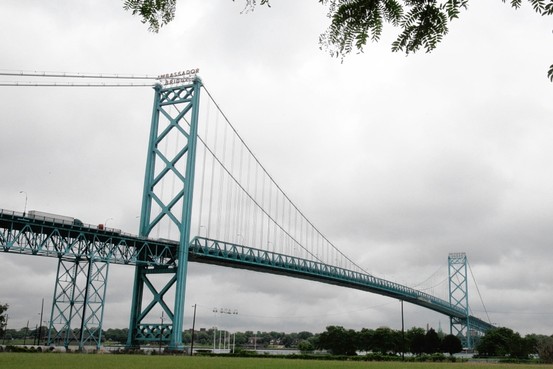


Trip to Canada to Spa---Peter left yesterday for Texas.   I used the time to get a pedicure AND a manicure.   Today I am headed to Canada to the town of Windsor, which is right across a tunnel from downtown Detroit.  I am going to Caesar’s Palace for a spa day.  I had a wonderful massage and scrub and won enough in the casino to cover the costs. Everything was perfect until I came back   I decided to take the bridge rather than the tunnel.   It was all fine as I approached the U.S. border.   “Where are you from?” asked the border patrol.  “Seattle.” I replied.   “What were you doing in Canada?” he asked.  “I went to the spa.”  I replied.   “Aren’t there spas in Detroit?” he asked in what I perceived as a snotty tone.  “Not ones as nice as this one in Canada.” I replied sweetly (although I think he thought my reply was rather tart).  “Hmmmm,” he said, “Who is this car registered to?”  I paused.  “It better be registered to my husband and I, but it could be just my husband.”   I should not have opened that door.   “Where is your husband?”  Uh oh.  “I’m not really sure. . . . .but I think Texas.”  I was getting a little rattled and my memory was failing fast.   “What’s he doing in Texas?” he asked.  “You know I’m not really sure, it’s usually secret.”  I was on the receiving end of the most incredulous look.  “You don’t know what your husband does?”  “Well, you see, we have separate careers and his work is with the government.   I don’t really pay attention.”
across the border.

He shook his head clearly signifying that he was thankful he was not married to me, handed me my passport and waved me through.


 Ford Rouge Assembly Plant:  We began with a tour of the Ford Rouge plant.   This is where they build the F-150 trucks.  However, this was the first of Ford’s major factories.  It employed a new system of manufacturing called “vertical integration”  Placed on a river adjacent to Lake Erie Ford brought in by barge raw materials iron ore, coal and limestone.  From these they manufactured all the metal parts for the cars.  He also developed an assembly line where the cars moved and the workers built the cars as they moved by.   Using this method, the raw materials  of iron ore, etc. a brand new car every seventy-two hours.   This was how he built so many Model Ts.  He was dependent on no one for parts, because he manufactured all his parts.   His designers developed the Model T to be incredibly hardy and flexible to better handle the rough roads of the time.   Additionally, employing over 100,000 workers, he doubled the going wage of $2.50 per day to $5.00 per day to staff his factory.


The Museum:  This is a museum featuring the Ford family’s collections.   Of course, there were cars.   But there was also a lot of Lindberg memorabilia since Henry Ford and Lindberg were close friends. 
 There was the car that Kennedy was riding in when he was shot.


  The chair that Lincoln was sitting in when he was shot. 


George Washington Carver’s microscope. 


The bus that Rosa Parks was riding when she refused to give up her seat,


and Buckminister Fuller’s Dymaxion house built by Ryan Aircraft in San Diego.

Friday, July 12, 2013

Monroe, Michigan


Campground:  We checked in to our new campground in Monroe, Michigan.   This one lies directly adjacent to the freeway.  It’s a really nice campground with tons of amenities-----and only a mile from Lake Erie.   Further investigation revealed a huge coal fire generating plant to our northeast, cooling towers for the nuclear power plant to our southeast; two sets of railroad tracks bordering the park on the west with direct freight access to Detroit and above us the flight path for Detroit International Airport.   We turned up the air conditioner and fans and hunkered down.
 
Raisin River National Park—1812 War---I knew about the war of 1812----the British burned down the White House.   The details I was missing were how far flung the war was.   Major portions of the war took place on the Great Lakes and for a time,  Michigan came under the control of the British.   I’m consoling myself with fantasies of the students in Michigan knowing nothing about Father Junipero Serra.  We spent a fun morning poking around the battlefield and touring the brand new interpretive center----this is the newest of the National Historic Sites.
 
 
Custer—We wandered into downtown Monroe, Michigan.  There on the corner was an enormous statue.  Peter was sure it was the hero of the War of 1812.  I  pointed out the huge C U S T E R on the side.   “Hmmmm,”  said Peter,  “I wonder if he was related to the Custer at Little Big Horn.”      I pointed out that he looked just like the Custer at Little Big Horn.  Two days later as we stood in the Custer museum in downtown Monroe, Michigan,  Peter agreed with me----it was the same Custer and he was born in Monroe, MI and married his wife there and, in fact, his entire family lived there and STILL lives there.   I was right.


Our last stop in Monroe, MI involved a very fun walk around town with map to view local architectural styles.  Walter hated this.  Jaxon thought it was boring, but Peter and I had a great time.  I made a video.  It can be viewed on YouTube.  Here is the link: 


Monday, July 1, 2013

July 1, 2013 Pennsylvania and Ohio


Luray Caverns:   Just minutes from our camping spot was a set of caverns.   Having gone  spelunking last year with the grandsons, I was feeling a little wary of signing up for the tour.   We stopped on our way to dinner to check out what was involved.   When the attendant told me we could bring the pugs in pouches strapped to our chests, I concluded we would not be wriggling through holes.   Do not miss these if you are in the area.   Without the pugs, Peter and I embarked on a tour of some truly beautiful caverns.   The most magnificent feature was the reflecting pond, which is always absolutely still and provides a perfect mirror image of the stalactites and stalagmites.  As you can see it is difficult to tell where the water meets the land.
 

The next day it was on the road again, this time for a two-day stop in a KOA northeastern Pennsylvania.   It was a long and horrid trip.   We paid tolls to drive on turnpikes that appeared to me had not been repaved since the 1970s.    Narrow lanes, lots of fast traffic and a jolt and a jounce every 300 yards.   Tired and cross we pulled off the exit ramp to the road leading to our camping spot.    Confronting us at the bottom of the exit ramp was an enormous Westinghouse plant-----think something slightly smaller than Boeing in Everett.    As we turned another corner I saw a sign directing delivery trucks to the “plasma center”.    “Good heavens,”  I said to Peter, “What is Westinghouse doing with blood?”   He didn’t reply.   When I looked over at him, he had one of those, “Oh my God, she’s lost it” looks on his face.   Much later we both had a good laugh when I realized Westinghouse was building plasma TVs.


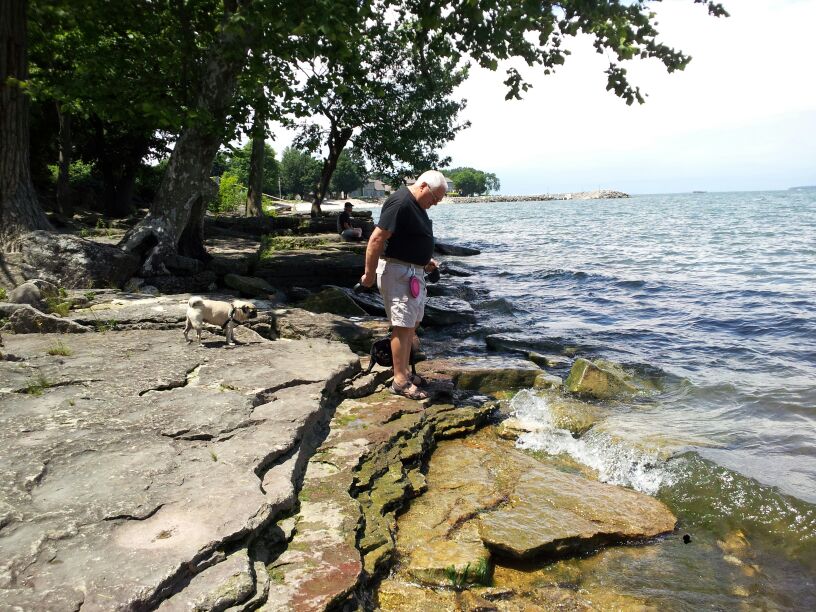
Another trip north and up a much better turnpike brought us to one of my favorite stops.  Marblehead, Ohio.  We were camped on a peninsula jutting out into Lake Erie.   The state park had long sandy beaches for walking that allowed dogs.   It was very odd to walk along a beach with waves with no tang of salt in the air.   Walter couldn’t get used to the fact that he could drink the water coming in-------he wasn’t making the connection that this was a lake either.   We had some great laughs by Marblehead lighthouse where, to save the shore, the community had put riprap (big concrete slabs and hunks).   As the waves came in, the water  would rush up into the spaces between the chunks and Walter would race down to get a drink, only to get splashed in the face as the next wave came in.   Lots of barking and yipping.


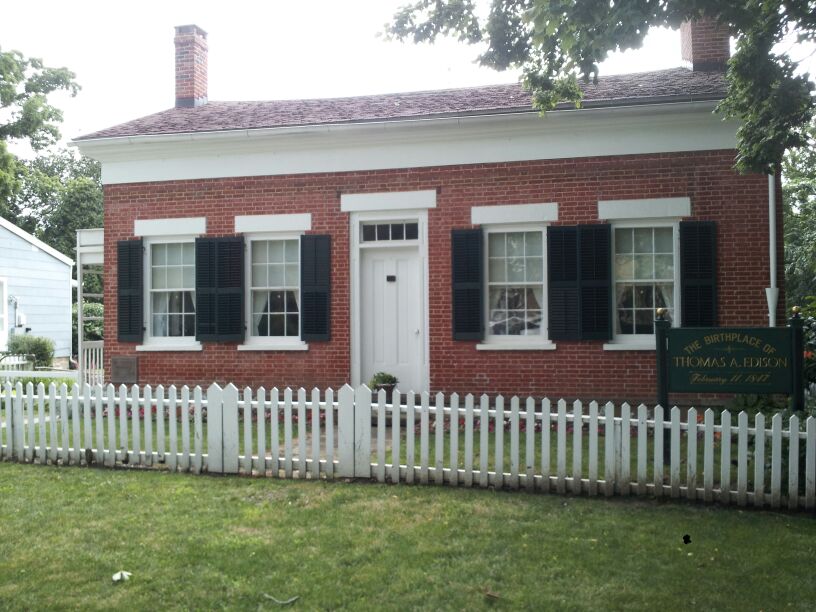
Edison’s birthplace:   Thomas Edison was born in Milan, Ohio, a place that looks remarkably like the town from Back to the Future—right down to the town square with the clock tower.   We took a day trip to see Edison’s childhood home.   He was quite the handful as a child.   He lasted 3 months in the public school before his mother decided to homeschool him.  His first invention at age 20 was a stock ticker for the stock exchange.   He sold it to the president of Western Union for $40,000.   The story goes that Edison told the Western Union president that he would have sold it for two or three thousand dollars.   The president responded by saying that he would have paid $100,000 to have it.

            What impressed me most was the relationship that developed between Henry Ford, Carnegie, Rockefeller and Edison.  So many smart men meeting and talking together.   It reminds me of Seattle with Jeff Bezos, Bill Gates, Warren Buffet, Richard Branson and the Boeings.  All kind of working together on and off and developing some really neat things.

Thursday, June 27, 2013

June 18 - 24, 2013 Shenandoah National Park and Surrounds


We are in Luray, Virginia at a beautiful RV park on the Shenandoah River.   This is our base as we explore Shenandoah National Park; the northern end of the Blue Ridge Highway.


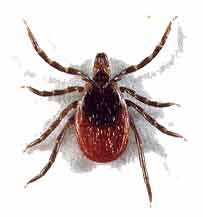
Ticks:   These little buggers are becoming a huge problem on the dogs.  I took the pugs for a long walk along the river and on my way checked out the park’s bathrooms.  Everything was gleaming, but it was also quite tick-ish, with the little monsters scuttling up the sides of the shower.   Not appealing.  Resigned to a “sailors’ shower”  in the camper, I took the dogs back and combed them for ticks.   I then prepared myself for my shower.   Peter burst through the bathroom door when I began screaming.  A tick had embedded itself in my hair… . . . . not my head hair, not my leg hair, not my underarm hair, not my facial hair (I’m through menopause, o.k.?)   Peter ran to get his special  tick-pulling, locking tweezers.  “Okay,” he ordered, “Go lie down on your back on the bed.”   Hmmm this was an invitation I’ve been waiting for, but not quite in these terms.   “Now lie still.” He’s never said this before under these conditions-----me, naked on the bed, him bending over by nether region.    One quick yank and it was over.  I scrambled off the bed and Peter hastened outside to dump the tick.  Okay, that was fast.


Woodrow Wilson Presidential Library:   I didn’t know a lot about Woodrow Wilson and what I did know came from the political comedy of the Capitol Steps, when during one of their “Spoonerism productions” the performer would say, “And then Woodrow Wilson won World War One.”   This always gets  a big laugh because all of the words start the same sound and flipping the first sound makes no difference.   As it turns out  President Wilson has some wonderful quotes of his own:


“A conservative is a man who sits and thinks------mostly sits.”


“The flag is the embodiment, not of sentiment, but of history.”


“No nation is fit to sit in judgment upon any other nation.”


“Life does not consist in thinking; it consists in acting.”


“If you want to make enemies, try to change something.”


“The ear of the leader must ring with the voices of the people.”


The fact that Wilson was a Presbyterian resonated with me.   He has some other rather scathing quotes about the other party; but these were the ones I liked.


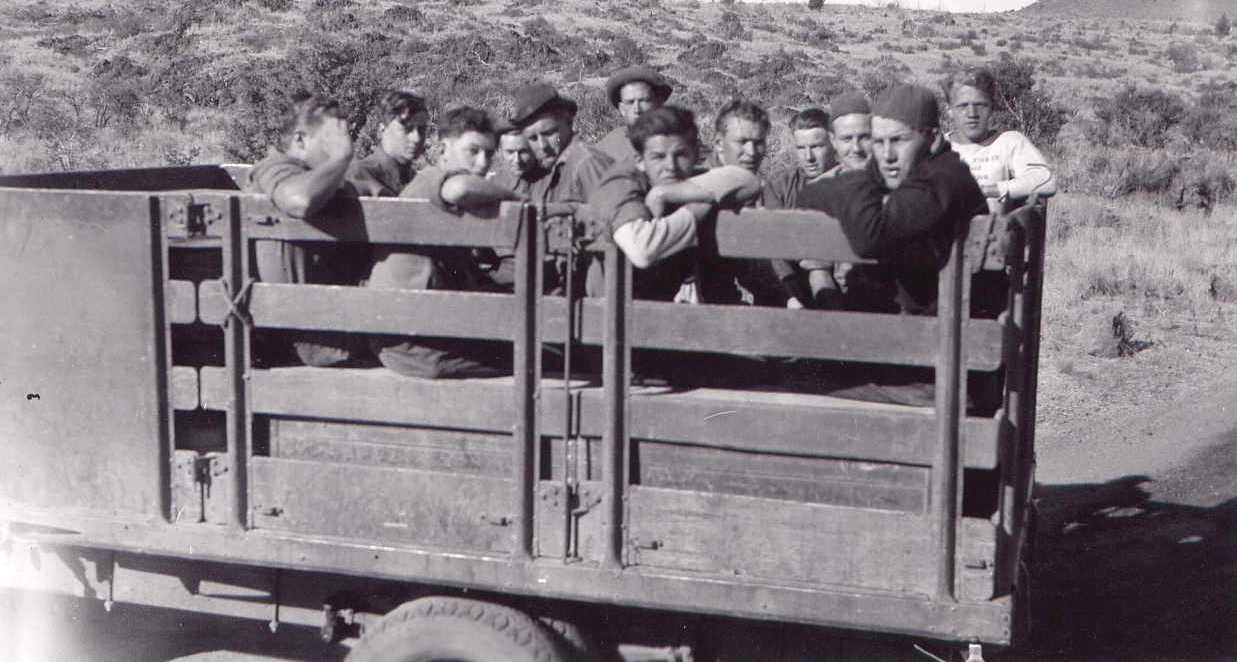
Shenandoah National Park:  We ventured into the mountains to gather information from the Visitors Center.   Through a movie there we learned that the entire park was constructed by the CCC (Civilian Conservation Corps).  After the government moved the farmers out of the Shenandoah area, they began construction of the Park.   This was happening right around the depression and part of Roosevelt’s plan was to take a generation of young people who were in poverty and give them a chance to do something constructive as well as help out their families.    Shenandoah National Park was one of Roosevelt’s endeavors.  The young men came from families in the local area.    It was their job to build roadways, trails, contours, flood control channels and buildings.  The boys in the Corps ranged in age from 18 – 25.    They came from families on public assistance.   The boys were paid $30 per month---$25 of which went to their families.   In addition to learning building skills, the boys were instructed in the evenings in reading, writing and math.    This is the group that fell between WWI and WWII.  No wonder--- they did so well; they provided money to their parents and honed their basic skills.   They also learned the skill of working together. 


Hiking


            One of the primary goals was to hike in Shenandoah National Park.   Neither hike went well.   On our first hike up one of the mountains, I fell and scraped my right calf.  It wasn’t too bad so we     I’m glad we did.   Wonderful views at the top and a deer spotting that was great-----until the dogs barked.
.


Our second hike took us up a trail to a lovely waterfall, then along  a stream, and finally up and out past another waterfall.  I was doing fine until I had to go pee-pee (we call urination by this name because it’s the one the pugs know).   By the time I’d told Peter, I had waited too long.  I threw my pack on the ground and scrambled up through the bushes to a fairly discreet spot.  As I crouched I could feel my arms and legs stinging and then itching.  I scratched furiously (not easy when you are 57 and trying to crouch, urinate and scratch all at once.   I finally managed to stand up (I’m a little stiff these days), scratched like crazy again and began carefully picking my way back down to the trail.   I was just crossing this little rock/boulder slide when I lost my balance.  My legs shot horizontally downhill, my bottom and lower back hit the rocks, I thumped and then bumped down toward Peter where I came to a stop.   As Peter rushed over to me I began honking like an ah-ooooo-ga horn, due to having had the wind knocked out of me.  All I remember is Peter saying, “Oh my God! Oh my God!” over and over.  Realizing he was starting to panic, I told. him I was okay and he pulled me to my feet.  He also found my glasses which were a mangled mess.   I knew I hadn’t broken anything and was mostly scrapes and bruises  so I insisted we finish the hike.   Peter bent my glasses back into shape and we were off.    It was a beautiful hike, and Walter and Jaxon had a tremendous time running in and out of the stream.   What you see below is my right buttocks.    That’s the whole buttocks and the whole bruise.   One of many from my left ring finger which is totally purple to the backs of my knees.  Thank goodness I brought an extra pair of glasses.


Monday, June 17, 2013

June 17, 2013 Natural Bridge, Useful Ridges, Stonewall Jackson and Walter


With the motorhome back and running better than ever, we have cruised well into Virginia.   We found ourselves at Natural Bridge, VA.  in a KOA campground.   People here take their camping seriously.  Last night was karaoke-----all  Johnny Cash and Merle Haggard.   Yeehah!   Actually the natural bridge is a wonder-----278 feet high; surveyed by George Washington (who carved his initials
into the rocks) and purchased by Thomas Jefferson.

 
This was a beautiful stroll along the stream that carved the bridge up to a waterfall----this is what I love about this trip.


Next was a drive up another stretch of the Blue Ridge Parkway.   We were set to take several hikes.   The first one was an exploration of an old logging track complete with the rails they used to move the    I knew the frontiersmen had logged this area, but the sophistication of building railroads to move the logs to canals (dug by slaves) and from there to the mills did not occur to me.   It explains the concept behind the Blue Ridge Parkway----the leveling for the roadbed had partly been done for the railroad.
logs out.


Finally, some famous names history.   Stonewall Jackson spent most of his life in Lexington, VA (this is his house), and Robert E. Lee retired here after the Civil War.   Jackson taught at Washington and Lee University and Lee ran the University.   In fact Robert E. Lee is buried at the University, along with most of his family and his horse, Traveller.   People had sprinkled baby carrots on Travellers’ grave stone.   It made my relationship with the pugs seem almost normal.   Which brings me to. . . . . . .

 
Walter and Jaxon have been real troopers, hiking over ridge and dale, scrambling under trees and fences.   All this outdoorsy activity has resulted in a new protocol when we return to the camper.    Jaxon tolerates this activity; but Walter relishes it!   See the video at :   http://www.youtube.com/watch?v=mmLIEYfljDY&feature=youtu.be

Thursday, June 13, 2013

June 13, 2013 Back in the Saddle Again!

We have the motorhome back!   Now we are poor, but happy.  It took Peter two trips to Charlotte, NC to finally get all the parts to the repair guys.  I think Walter was the most excited to get back into the motorhome.   He would not stop running in circles and barking.    We decided to give ourselves an extra day to just hang out, clean and organize.    We both deemed this necessary because the young men who worked on the motorhome were just that----young-----careless------impulsive--just in my opinion.   I do have evidence.    The grease rag left on top of the exhaust pipe.  A couple of connectors left undone.   The fact that Peter is insisting on having a day to go through EVERYTHING before he gets back on the freeway.   On the other hand.    This is a lovely place.   We are by the Blue Ridge Parkway in the hills of Virginia.   It's clear to see why Scots and Irish settled here.   It looks a lot like their homeland-----only with trees. Oh!  Oh!  Peter is going to try to start the motorhome again. . . . . . .thank God.

Sunday, June 9, 2013

June 9, 2013 Battlefields, Prehistoric Natives, Metalmetamorphis

We are headed for Charlotte, NC to pick up the fuel injector pump for the motorhome.   Once we get it, we will deliver it to Low Gap, NC and wait while the guys install it.   We've pretty much seen all there is to see in North Carolina.    Before we left the Outer Banks we made one last trip to the Wright Brothers' memorial.   We did the inside exhibits without pugs.   What struck me most was how systematic the Wright Brothers were.   They began by questioning the conventional wisdom about flight available at the time.   They looked at every part of the design.   They built countless ailerons and tested them in a wind tunnel they built.   They gathered data and found the best design.   They also worked on wing design and tested different types by hang gliding off the dunes.   I had no idea.   The museum also had tributes to all the people who have contributed to flight (e.g., Chuck Yeager, Amelia Earhardt, the Tuskeegee Airmen).   No Bill Boeing, however.


Our next stop was the Battle of Bentonville.   What can I say?   Large, grassy areas ringed by woods. We did get to see a re-enactment of a small skirmish between the men in blue and the men in gray.    The gunfire caused the pugs to bark hysterically, so we tucked them into the car and did the cell phone tour of the battle site.


We continued south and drove inland to see some Indian Mounds.    After a long drive, we arrived to find the place closed.   Undaunted, we took the pugs and approached the site wall.   I noticed the wall was sparse on the backside, so we squeezed though some uprights and toured the grounds/mounds on our own.   Getting out of the enclosure was a little tricky, but squeezing and pushing reluctant pugs through accomplished the goal.   We also had the added benefit of getting to spend time picking ticks off ourselves and the pugs!

As we approached Charlotte, I suggested we go see this cool statue in a business park called "Metalmorphosis".   This turned out to be a very cool stop.   The statue is a digitized metal head.    The cool part is that it morphs into weird abstract shapes then reassembles itself.   See YouTube video:   http://www.youtube.com/watch?v=pGCln17yUn0